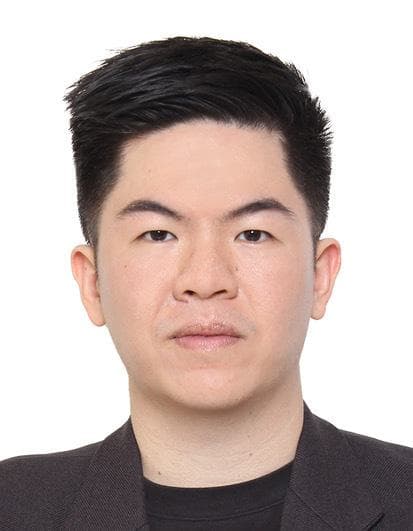
In under two years at Abnormal, Michael Wiryadinata Halim has worked on four different teams, picked up entirely new skill sets on each one, and kept delivering. For Michael, that pattern has always been intentional, driven by a straightforward belief that the fastest way to grow as an engineer is to keep working on things you haven't done before.
Always Say Yes to the Hard Thing
Michael joined Abnormal on the NEP (New and Emerging Products) team, where the work was exactly what the name suggests. "We were always building something new, basically making Abnormal's next products," he said. It was a strong start, but what came next pushed him further.
From NEP, Michael moved to DLP, Data Loss Prevention, a product that required him to learn data engineering and detection systems from scratch. He had no background in either. "I had to move on a few things simultaneously," he said. "I moved early, choosing a small scope, and learned by taking things apart and fixing them."
"The fastest way to grow as an engineer is to keep working on things you haven't done before. So every time something new comes up, I almost always say yes."
He also leaned on his colleagues heavily during those early DLP weeks. "I asked a lot of questions, because they had experience I didn't have," he said. "And I spent time alone going through existing code to understand how everything connected. Nothing alone is enough, but together, it all starts to move."
What Velocity Actually Means
Shipping DLP came with a hard deadline: RSA 2025, six months away. For Michael, the pressure revealed something he hadn't fully understood before.
"The biggest lesson was really living one of our values, which is Velocity," he said. "What I learned is that Velocity doesn't come from working faster. It comes from trust and tight team communication."
"When you trust your team and communication is tight, you stop second-guessing decisions, and you don't waste days going in the wrong direction."
That reframe changed how Michael thinks about his own output. Speed is a team condition, built through alignment rather than individual effort. The shift moved his focus from how fast he could write code to how fast the team could move together.
When the Work Becomes Real
After DLP, Michael moved to Configuration Platform, a team responsible for critical systems that touched every engineer at Abnormal. "Suddenly I was working on a critical platform system that every other engineer at Abnormal depends on," he said. "The bar for reliability was high in a way I hadn't felt before."
Then came BVA, Business Value Analysis, and the moment that reframed everything.
Michael's team built Abby, Abnormal's external concierge that gives customers a conversational interface for interacting with products like the AI Data Analyst. When the feedback started coming in through customer success managers and feedback channels, something shifted. "Reading incoming customer feedback, hearing what customers were actually saying about Abby, it was a really interesting time," he said.
"It's not just about building good code. It's about making sure what we're building actually helps people on the other side."
That realization, that his technical decisions had a direct line to real customer outcomes, changed how he understood the purpose of his work.
What Engineering Looks Like Now
Today, Michael builds multi-agent AI systems that interact with customers to show the value Abnormal produces. The nature of the work itself has shifted in a way he finds genuinely interesting.
"AI shows up in most of my days now," he said. "The biggest change is how I spend my time. I hand off most of the implementation to AI agents, so my own time goes toward the parts that really matter: system design, framing problems, and making the right calls."
"Agents write the code. I focus on getting us on the right path."
That shift has changed what it means to be an engineer, at least for Michael. "It feels less like being a coder and more like being a problem solver," he said. "I spend more time thinking about what we should build and why, and less time thinking about syntax. The work has leveled up, from 'how do I write this' to 'what should I write.'"
He's direct about whether that's a good thing. "When AI can handle implementation, what really matters is the quality of your thinking, the questions you ask, the direction you set. I find that genuinely exciting."
The People Who Keep Pulling You Forward
Across every team, one thing has stayed constant for Michael: the caliber of the people around him.
"In every interaction at Abnormal, across every team, I keep meeting very smart people," he said. "People who think clearly, ask the right questions, and set the bar high without making it feel impossible."
That environment has become its own form of momentum. Every code review, every collaboration, there is always something new to learn. "Everyone here keeps moving forward," Michael said. "And that force pulls me forward too."
"Every new team, every new challenge, has shown me how much I still have to learn. And honestly, the more I learn, the more I realize how much I don't know. That keeps me humble."
For Michael, humility and curiosity are the same instinct. The day you stop feeling like a beginner is the day you stop growing. At Abnormal, he hasn't had to worry about that yet.
