
NOTE: Demo visuals include blurred data or synthetic placeholders to protect customer privacy.
Website Polish Slowed Shipping
Earlier iterations of the pipeline could produce solid structure and copy, but the results still looked unfinished. The team could get “a page,” yet it missed the motion, imagery, and branded details that help a site feel professional and keep attention.
That gap mattered because the website is a living product. Refreshes are frequent, experiments are common, and reviews pile up quickly when each change requires manual design and scattered feedback.
Three frictions showed up repeatedly:
- Pages had layouts and text but lacked high-quality images and looping video assets that aligned with the brand direction.
- Brand consistency was hard to enforce when assets were generated ad hoc, without clear tokens such as color standards.
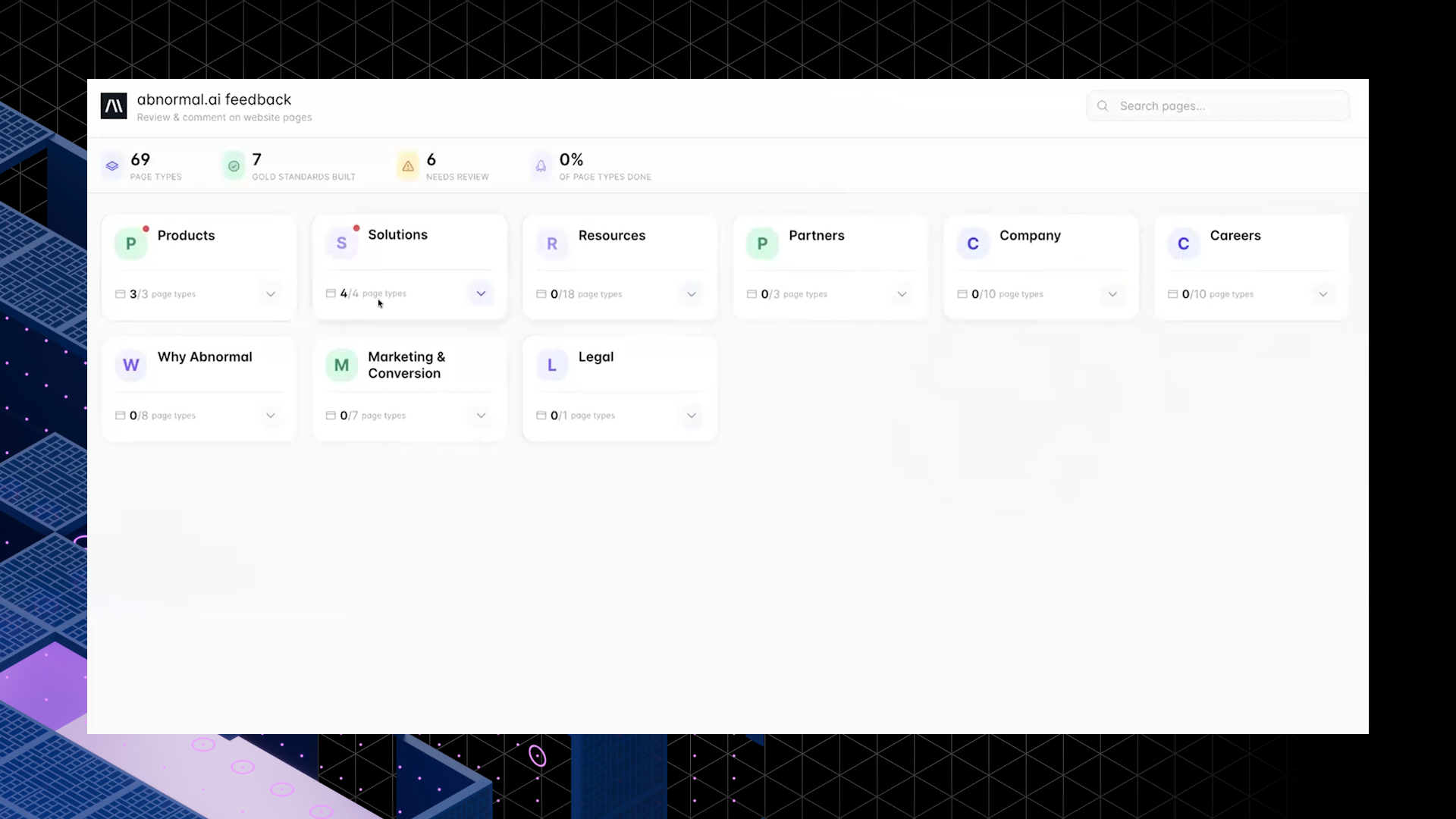
- Feedback was delivered through tools like Google Docs and one-off comments, which made it hard for agents to learn and avoid repeating the same issues.
Agents Build Pages and Assets
Code to Content now runs as a three-agent pipeline. The builder agent assembles modern components from a “golden” library. A writer agent fills in the narrative.
A dedicated image and video agent generates the motion assets that add the missing finish, including looping videos designed to blend into page backgrounds.
Key capabilities Brandon demoed:
- Generate a full website page in minutes from a command, then review the result end-to-end.
- Place branded videos and images into the right sections, paired with interactive components and lightweight animations.
- Swap visual styles across the site, from a cyber glassy feel to other art directions, without rebuilding the pipeline.
- Reuse a curated component library so the builder agent can decide where pieces fit, instead of starting from scratch each time.
- Capture structured feedback and route it back to agents for iterative improvement.
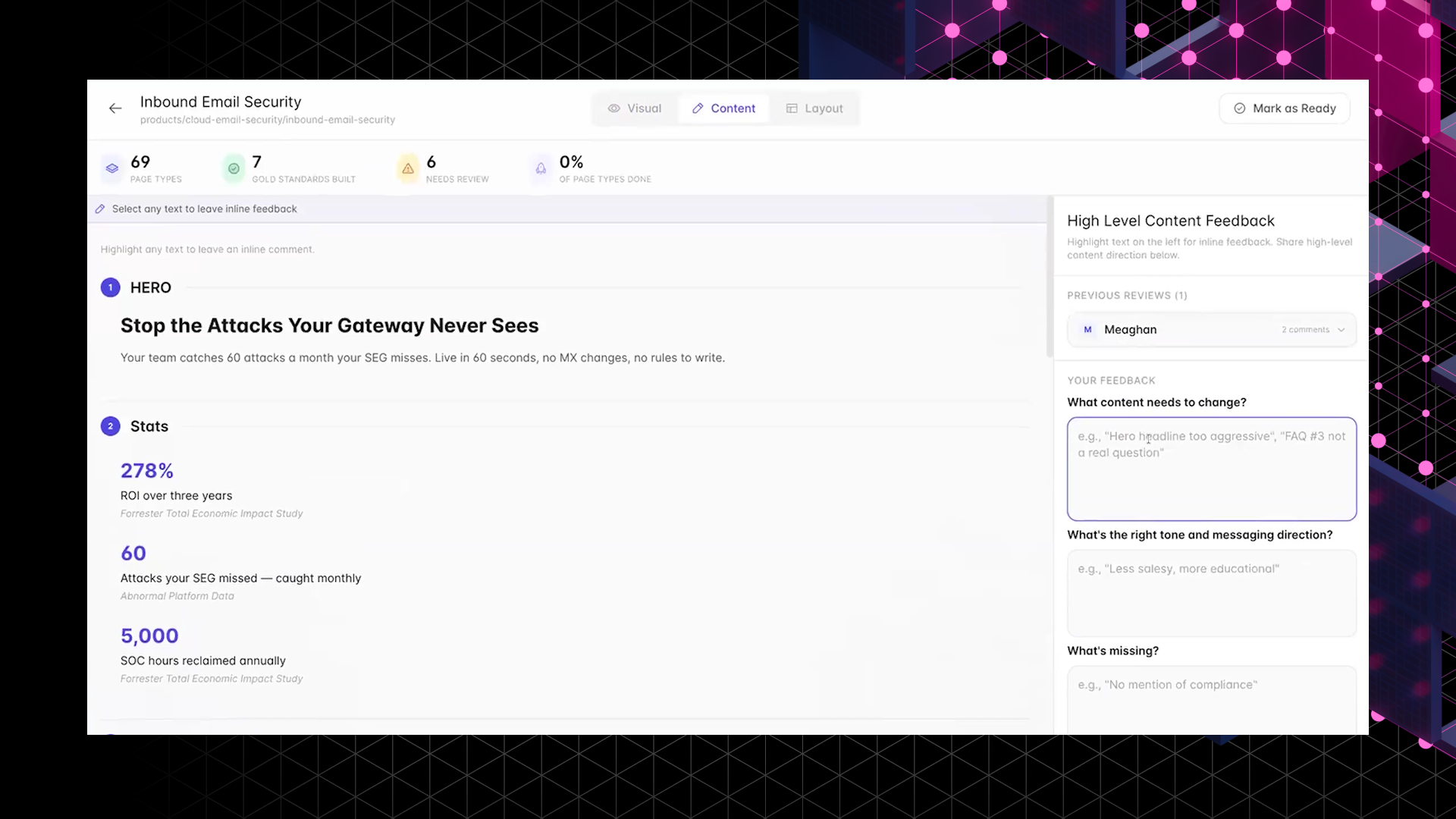
As Brandon put it: “What currently takes humans weeks, we’re doing in minutes now.” The second half of the demo showed why that speed can hold up over time: a self-learning feedback layer that turns reviews into inputs the system can actually use.
Minutes to Usable Drafts
With three agents working together, the pipeline moves from “content draft” to “page draft with polish.” That shift serves multiple audiences: marketing can iterate on pages more often, and engineering can standardize how changes are requested and applied.
What this update highlights in practice:
- Faster page iteration by generating copy, components, and looping assets together.
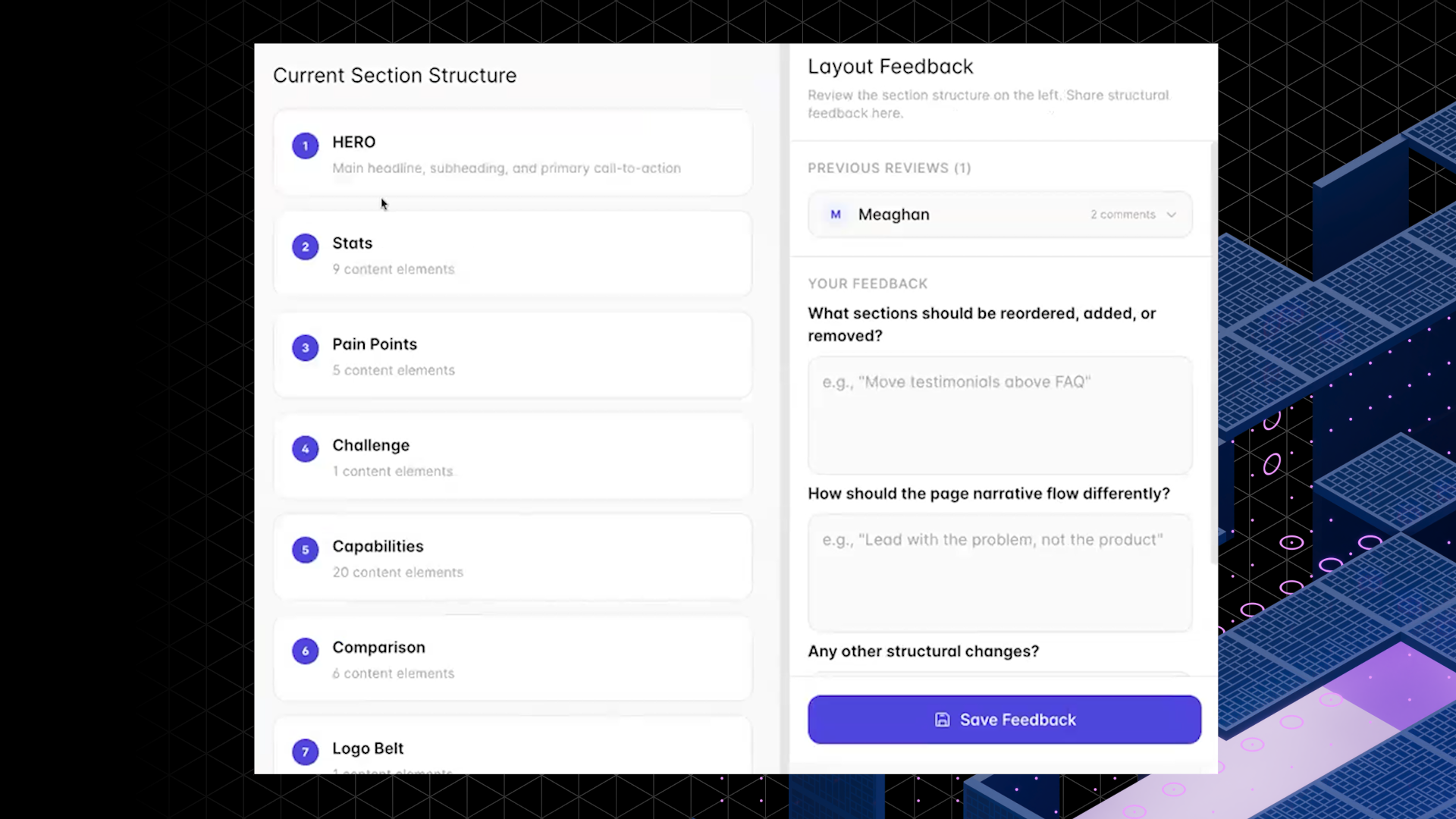
- A clearer review workflow, since reviewers can see pages, comment inline on content, and request layout changes in one place.
- Less repeated manual cleanup, because the feedback backend can translate edits into structured guidance for the agents.
- A path to brand consistency as the team tightens style constraints like color tokens and reusable components.
Next step: harden the Streamlit feedback app for production use and expand the data sources it can plug into, so more teams can reuse the backend and drive the same quality flywheel.
The Forum Blew Up
Peers responded to Brandon’s demo: it felt like two parts of the same system, generation plus learning, rather than a one-off prototype. The moment the feedback UI clicked, it reframed the work as an extensible platform that other teams could adopt, not just a website tool.
That matters culturally inside Abnormal because it rewards builders who ship reusable primitives. The signal from the room was clear: take the backend pattern, plug in different content sources, and use the same visual and inline feedback flow to accelerate other internal projects.
