
The Recap
In earlier editions of the Jira Orchestrator series, Tushar introduced how Nora was evolving from a Jira assistant into a true orchestrator, creating PRDs, TDDs, epics, tasks, and proactive next steps directly inside Jira. These capabilities significantly reduced downstream planning and execution effort.
As adoption grew, a clear gap emerged at the very beginning of the workflow. While planning and execution were becoming more efficient, initial RFE intake and triage remained largely manual. PMs were receiving a high volume of RFEs with missing data, duplicates, or unclear status, and there simply wasn’t enough time to perform thorough first-pass triage on every ticket.
The L1 RFE Triage Persona was created to address that exact bottleneck.
The New Capabilities
The L1 RFE Triage Persona now automatically handles the first layer of feature request evaluation inside Jira.
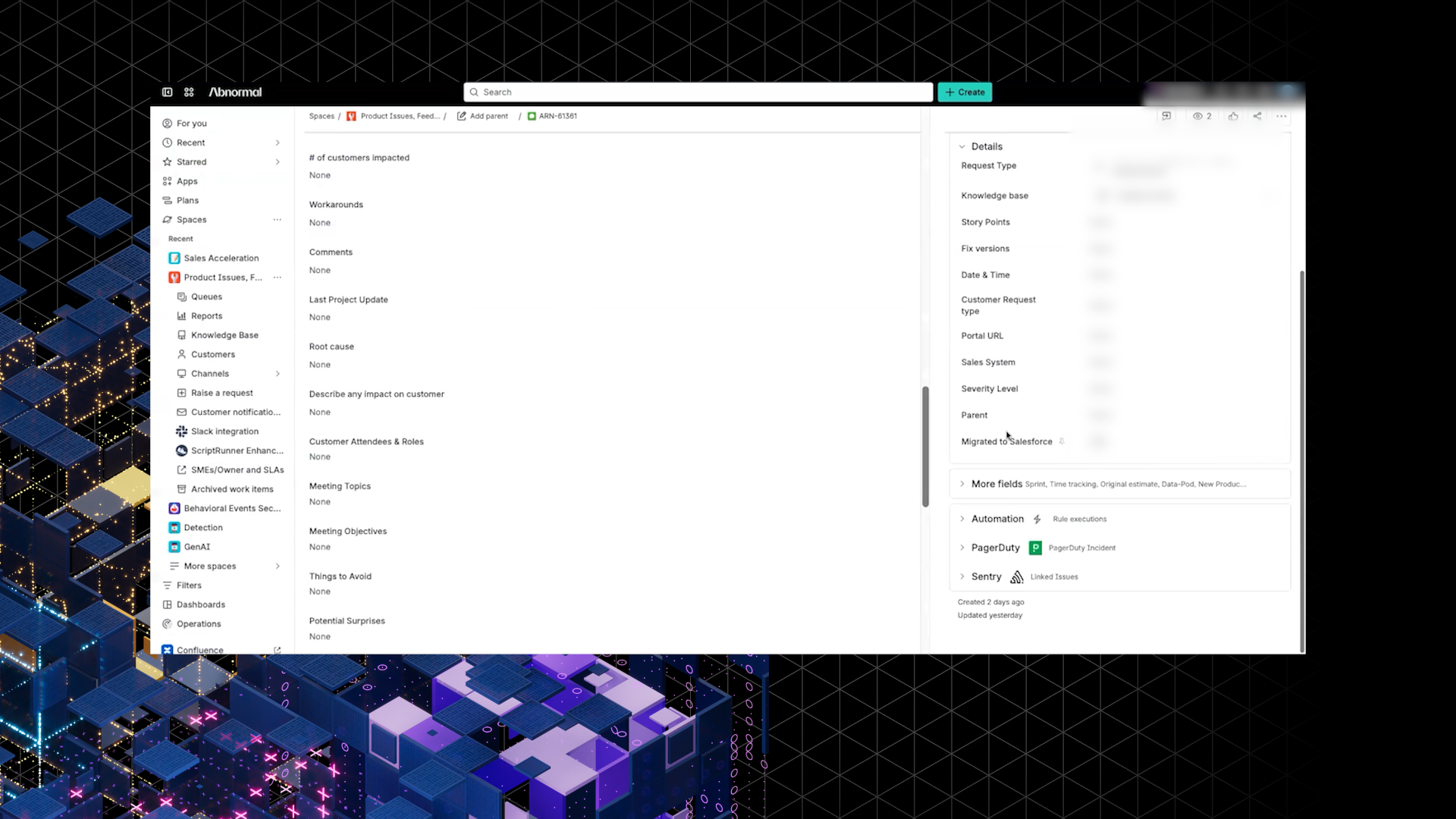
When a new RFE is created, Nora checks whether a similar ticket already exists. If a duplicate is found, the persona links the new request to the canonical ticket and enriches it with additional customer context, such as customer name, ARR, and renewal date. This ensures demand is aggregated correctly and high-impact features aren’t fragmented across multiple tickets.
For tickets missing key business context, the persona performs metadata hydration by pulling information directly from Salesforce. Customer health, ARR, renewal timing, and other prioritization signals are added automatically, making tickets complete and actionable without manual follow-up.
The persona also performs roadmap alignment. If a requested feature is already shipped, planned, or actively in progress, Nora identifies that status and surfaces the relevant roadmap or documentation. In those cases, it drafts a clear response that GTM or CS teams can use directly with customers, reducing back-and-forth and confusion.
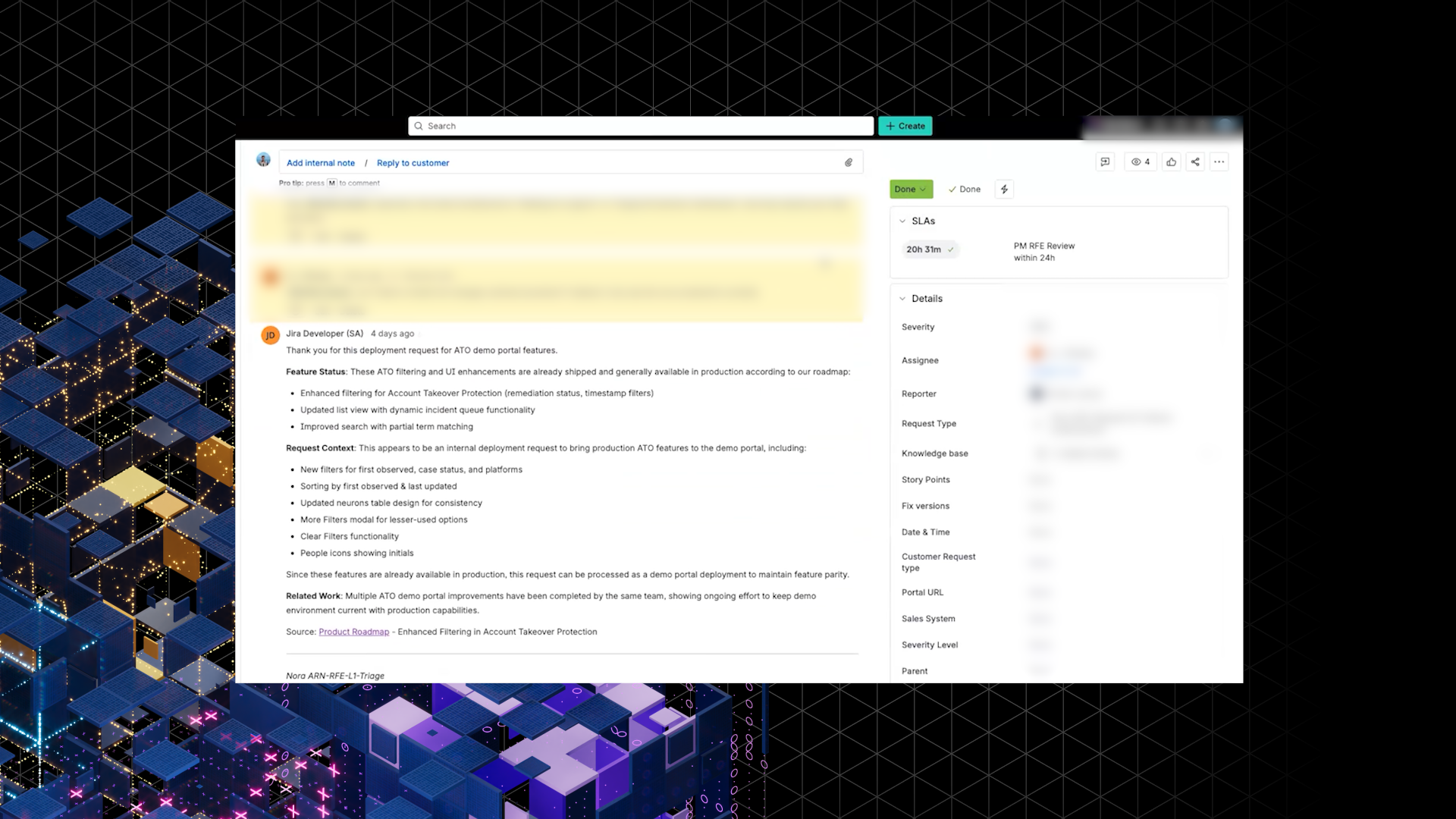
Together, these capabilities transform RFE intake from a manual sorting exercise into a consistent, automated workflow.
The Impact
The immediate impact is a significant reduction in manual triage work for PMs. Instead of spending time validating duplicates or chasing missing context, PMs receive RFEs that are already enriched, deduplicated, and aligned with the roadmap.
This also improves prioritization quality. By consolidating duplicate requests and updating canonical tickets with additional customer impact, important RFEs are less likely to be overlooked. At the same time, GTM and CS teams benefit from faster, more accurate responses when a feature already exists or is already planned.
Most importantly, the L1 persona establishes a consistent standard for feature request intake. Every RFE now enters the system with the same baseline of business context, regardless of who submitted it, making quarterly planning and roadmap discussions more data-driven and less reactive.
What’s Next
The next phase focuses on feedback loops and higher-level planning insights.
Upcoming enhancements include collecting explicit feedback on Nora’s ticket responses so that “golden answers” can be learned and reused. Smart assignment is also being added, automatically routing net-new RFEs to the correct PM based on area ownership.
On top of that, Tushar is building summary layers for PMs. Weekly digests will highlight new RFEs, duplicates, and resolved requests, while a quarterly priority planner will surface RFEs ranked by customer health, ARR, and renewal proximity ahead of planning cycles.
With L1 triage automated, the Jira Orchestrator continues its evolution into a full demand-management system, one that ensures every feature request is evaluated consistently, efficiently, and with the right context from the moment it’s created.
