
Upleveling Existing Processes
As Abnormal’s AI transformation has accelerated, many teams have started using similar building blocks to power workflows like pre-meeting briefs, post-call coaching, and account insights. These workflows often pull from the same data sources (Salesforce, Gong, calendars, etc.) and rely on large language models to generate outputs.
But despite the shared foundation, building each variation still required a familiar process: embed with a team, gather requirements, write specs, build, test, and iterate. Even when things moved quickly, the loop still took weeks.
Tim Davison saw that the real constraint wasn't technology. It was how AI tools were being built and delivered.
Customization As A Bottleneck
Across Customer Success and broader GTM teams, different roles needed different outputs. A pre-meeting brief for an Account Executive looked very different from one for a CSM. A QBR summary required different context than a renewal prep.
In most cases, the only thing that truly changed was the prompt. Yet every variation still had to go through a PM or builder, even though the reps themselves knew exactly what they wanted. That meant AI adoption was limited by PM capacity, not by demand or creativity.
Tim summed it up simply: AI workflows were effective, but they weren’t flexible enough for the people using them.
A Self-Service Nora Task Builder
The Nora Task Builder flips that model. Instead of requesting a new tool, GTM reps can now create their own AI tasks by defining a few core elements: when the task should run, which meetings or accounts it applies to, and how the prompt should be written.
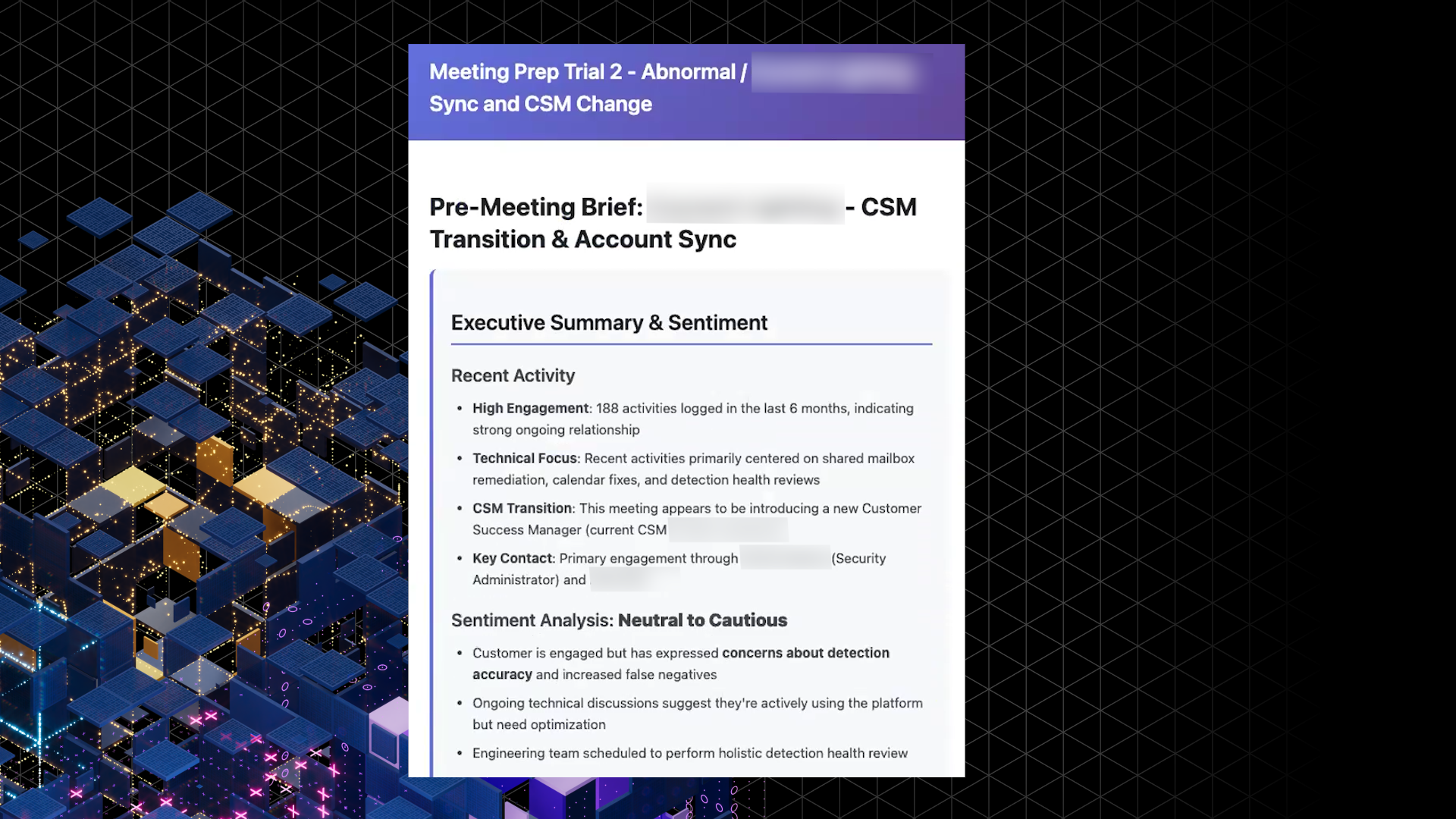
For example, a CSM taking over a new account can configure a task that automatically runs before meetings, pulls relevant account history, highlights expansion opportunities, and uses Abnormal-specific language. If something isn’t useful, they simply remove it from the prompt. If they want the output to be shorter, more tactical, or focused on QBRs, they adjust it themselves.
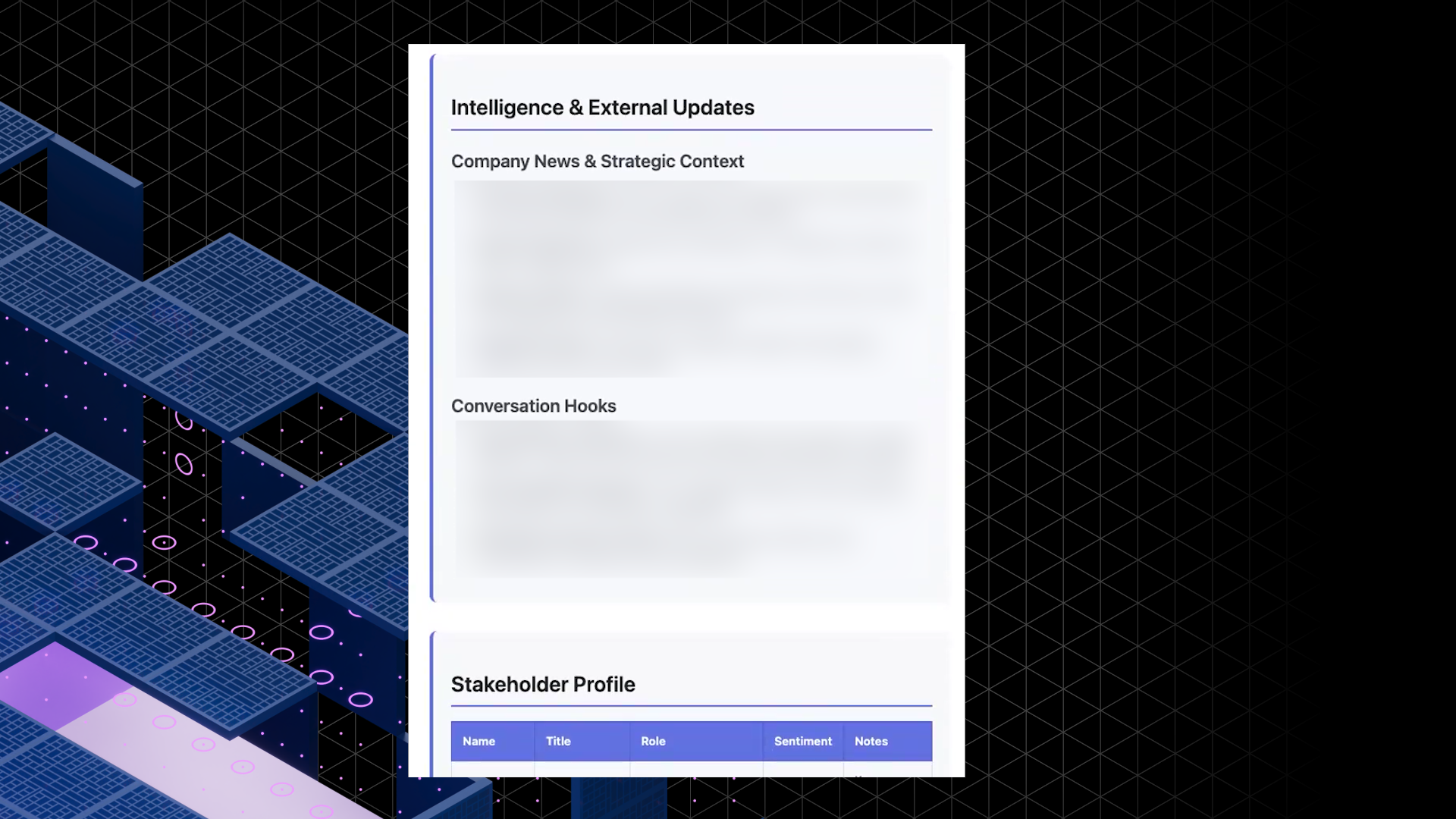
Behind the scenes, the system works with any supported LLM and uses a structured template to help users write effective prompts. The goal isn’t to turn reps into engineers, but to give them just enough guidance to experiment safely and productively.
What Happened in Practice
Tim tested the Task Builder with a newly onboarded, experienced CSM who was taking over several accounts. After a short walkthrough on how to iterate on prompts, the CSM refined their own pre-meeting brief in under an hour. By the end of the day, they had a task that produced exactly the context they needed, something that previously would have taken a week of back-and-forth with a PM to build.
More importantly, the CSM understood why the output worked. They could adjust it themselves as their needs changed, without opening a ticket or waiting for a new feature.
AI Creation Moves to the Edge
The Nora Task Builder represents a shift in how AI tools are created at Abnormal. Instead of centralized teams building bespoke workflows, the people closest to the work can now define what they need directly.
This reduces build time dramatically, but it also changes behavior. Reps stop treating AI as a static tool and start treating it as something they can shape. PMs, in turn, can focus on platforms, guardrails, and shared capabilities instead of one-off solutions.
Just as importantly, the Task Builder lowers the barrier to experimentation. With a reusable onboarding guide and clear prompt structure, teams learn how to think about AI tasks, not just consume them.
The Nora Task Builder is already changing how GTM teams interact with AI. New reps can get up to speed faster. Existing reps can tailor workflows to their role and meeting type. PMs can scale impact without scaling bespoke builds.
Compared to AI demos from just a few months ago, the difference is striking. Build cycles are shorter, ownership is closer to the user, and AI adoption feels less like a rollout and more like a habit.
Looking Ahead
Over time, the Nora Task Builder opens the door to shared prompt libraries, role-based templates, and best practices that spread organically across teams. The long-term vision is simple: if a rep can describe a task in words, they should be able to turn it into an AI workflow.
By turning prompts into products and users into builders, the Nora Task Builder moves Abnormal one step closer to a truly AI-native operating model, where speed, flexibility, and curiosity drive how work gets done.
