
NOTE: Demo visuals include blurred data or synthetic placeholders to protect customer privacy.
Safer Changes, Less Toil
Abnormal’s PCCMR process exists for a reason. When an engineer plans a production change that could significantly impact customers or risk an outage, they create a PCCMR ticket that describes what will happen, when it will happen, success measures, and what to do if things go wrong. It gives technical leadership visibility and helps ensure risky changes are executed safely.
In practice, the process can drag. The “what” and “how” live across many places, and the ticket quality varies by author and time pressure.
- Scattered context across Slack threads, Zoom conversations, and the GitHub PR itself.
- Formatting plans, commands, and dashboards into a JIRA ticket takes extra time and attention.
- Ticket details are inconsistent, especially regarding the rollback strategy and monitoring specifics.
A CLI Agent Writes Ticket
Nora PCCMR is an internal Nora agent that turns fragmented notes into a structured PCCMR and pushes it into the existing workflow. Engineers paste raw context into a command-line interface, and the agent does the heavy lifting by extracting a comprehensive plan, then running a second pass to ensure the ticket is as detailed and complete as possible.
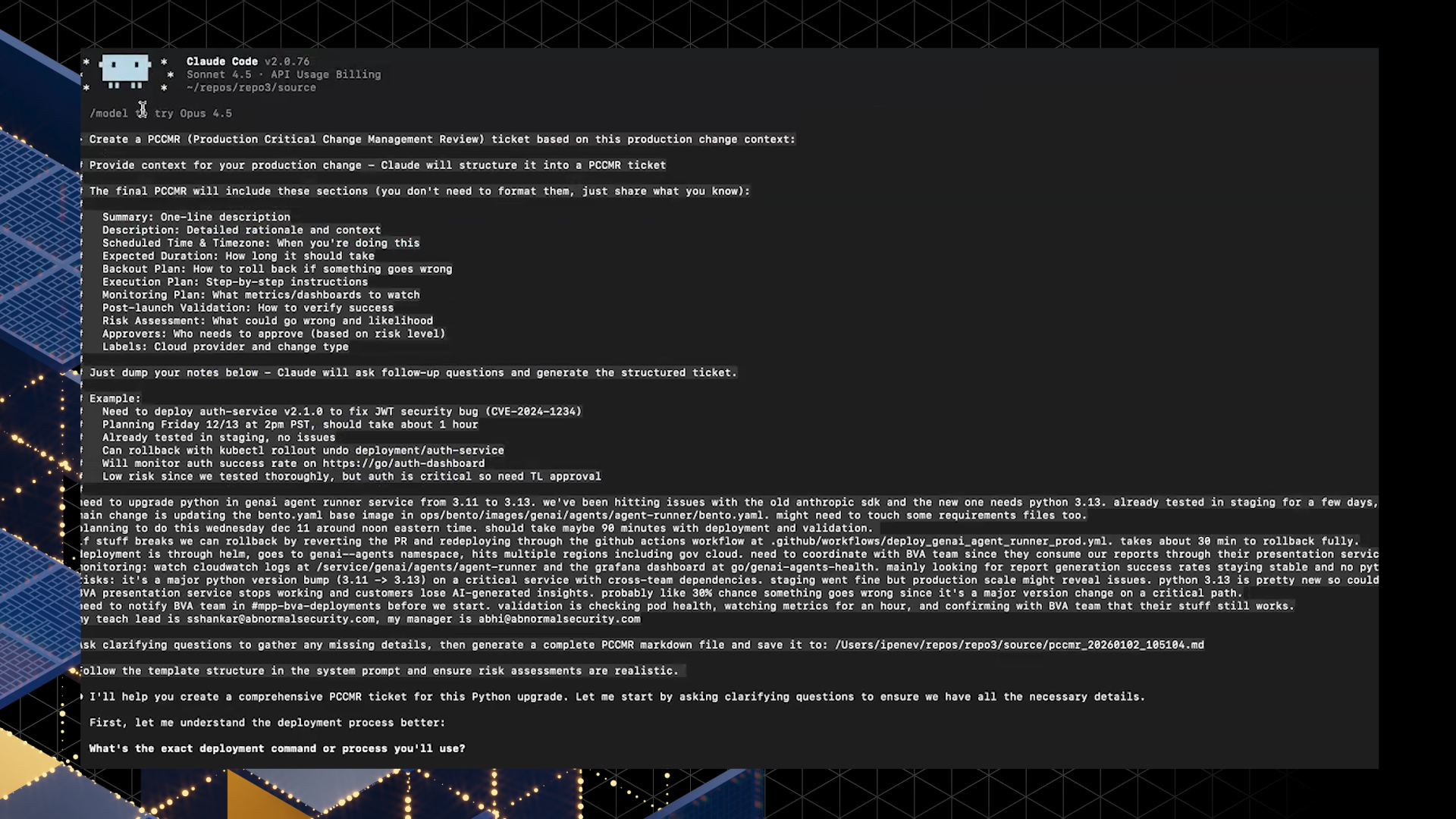
Key capabilities in the workflow:
- Generates execution, validation, monitoring, and back-out plans in a PCCMR markdown format
- Asks follow-up questions to fill in missing details, like exact commands and dashboards to watch
- Pushes for specificity on rollback steps, not vague “we’ll revert” language
- Validates the draft before creating the final JIRA ticket
As Ivan put it, the intent is that engineers can “focus on the change, and hopefully our systems will be able to handle the paperwork on the back end.”
In the demo, the agent produced a PCCMR that included step-by-step commands and a detailed back-out plan, then created the ticket in JIRA. The experience shifts PCCMRs from “the engineer knows what to do” to documentation that another engineer can actually run if needed.
More Consistent Operational Hygiene
The immediate win is reduced toil for engineers who already understand the change but lose time translating it into a review-ready format. The bigger win is consistency: a clearer execution plan, sharper monitoring expectations, and rollback instructions that stand up when the stakes are high.
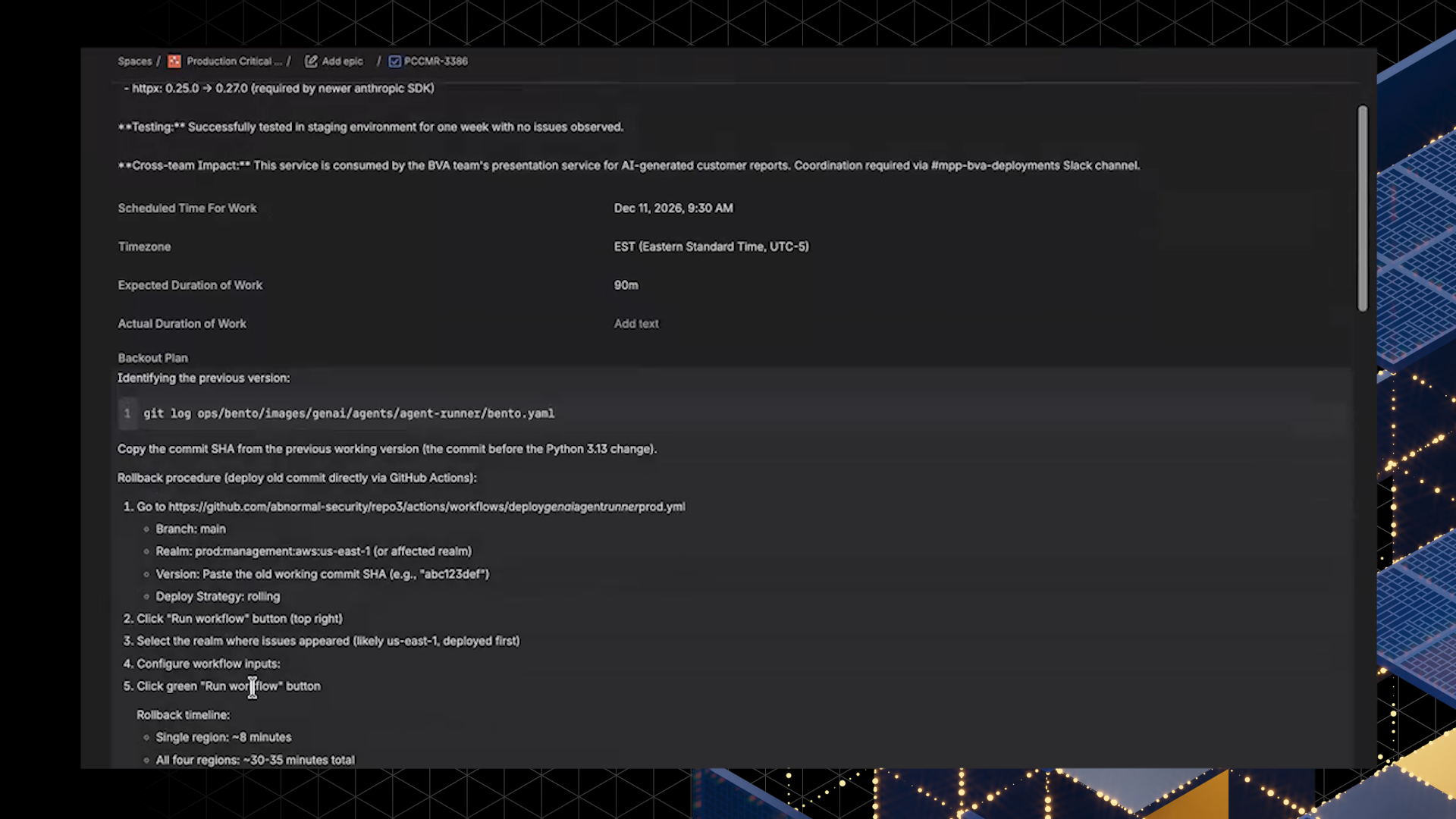
For engineers, this means fewer context switches and less time spent polishing a ticket template. For technical leadership, it means more reliable visibility into risky changes and fewer surprises due to missing details. The tool also matters during holiday and code-freeze windows, when teams still need to ship changes,s and the overhead of “doing the paperwork” can become a deciding factor.
- Less time spent assembling context from Slack, Zoom, and PRs into a single narrative
- Higher-quality tickets with concrete commands, dashboards, and back-out steps
- Stronger customer stability posture through clearer pre-change and rollback planning
Next step: expand the pilot into a broader rollout via internal enablement, starting with the planned brown-bag session and a lightweight adoption playbook that standardizes how teams invoke the agent for common PCCMR types.
Questions that Force Clarity
Peers and early users described the agent as applicable because it asks questions people often skip when rushing, especially “which dashboards and panels should you watch?” and “what is the rollback plan in real steps.” That kind of prompting doesn’t just speed up a form. It nudges teams toward operational habits that scale.
The cultural signal is strong: builders used it during holiday windows when the friction of writing a PCCMR can delay shipping entirely. By making thoroughness easier than shortcuts, Nora PCCMR supports Abnormal’s mission to protect customers and keep critical systems reliable while teams continue to move quickly.
