
From Code Generation to System Design
AI has already changed how we write code, but it’s now beginning to reshape how we design systems themselves. That’s the idea behind Nora Tech Plan, a new project from Shrivu Shankar, designed to close the gap between human-led architecture and AI-driven implementation.
TDDs Weren’t Built for AI
Abnormal’s engineers are using AI tools across the development lifecycle, from code generation to testing. But one area remained stubbornly manual: technical design documents (TDDs).
TDDs describe how a project should be built, outlining configurations, dependencies, and environments. While tools like Gemini and ChatGPT help fill in details, the process still relies heavily on human iteration. The AI “assists” in writing, but it doesn’t actually design. And most importantly, TDDs are written for humans, not machines. They aren’t in a format that AI can directly use to start building.
That disconnect created two major bottlenecks:
- High human-in-the-loop effort: Junior engineers still had to guide AI step by step, instead of AI learning from senior architectural patterns.
- Translation gap: Even when a TDD was AI-generated, it wasn’t detailed or structured enough to be fed directly back into AI for implementation.
Shrivu saw an opportunity to fix both.
AI-Ready Technical Planning
Enter Nora Tech Plan: a new workflow that builds tech designs the way AI works, not just the way humans write.
Instead of forcing existing engineering processes into an AI framework, Shrivu flipped the model to start from how engineers already use AI tools naturally (e.g., planning in markdown, generating AI specs), and then integrate Abnormal’s internal design principles and codebase knowledge into that process.
Here’s how it works:
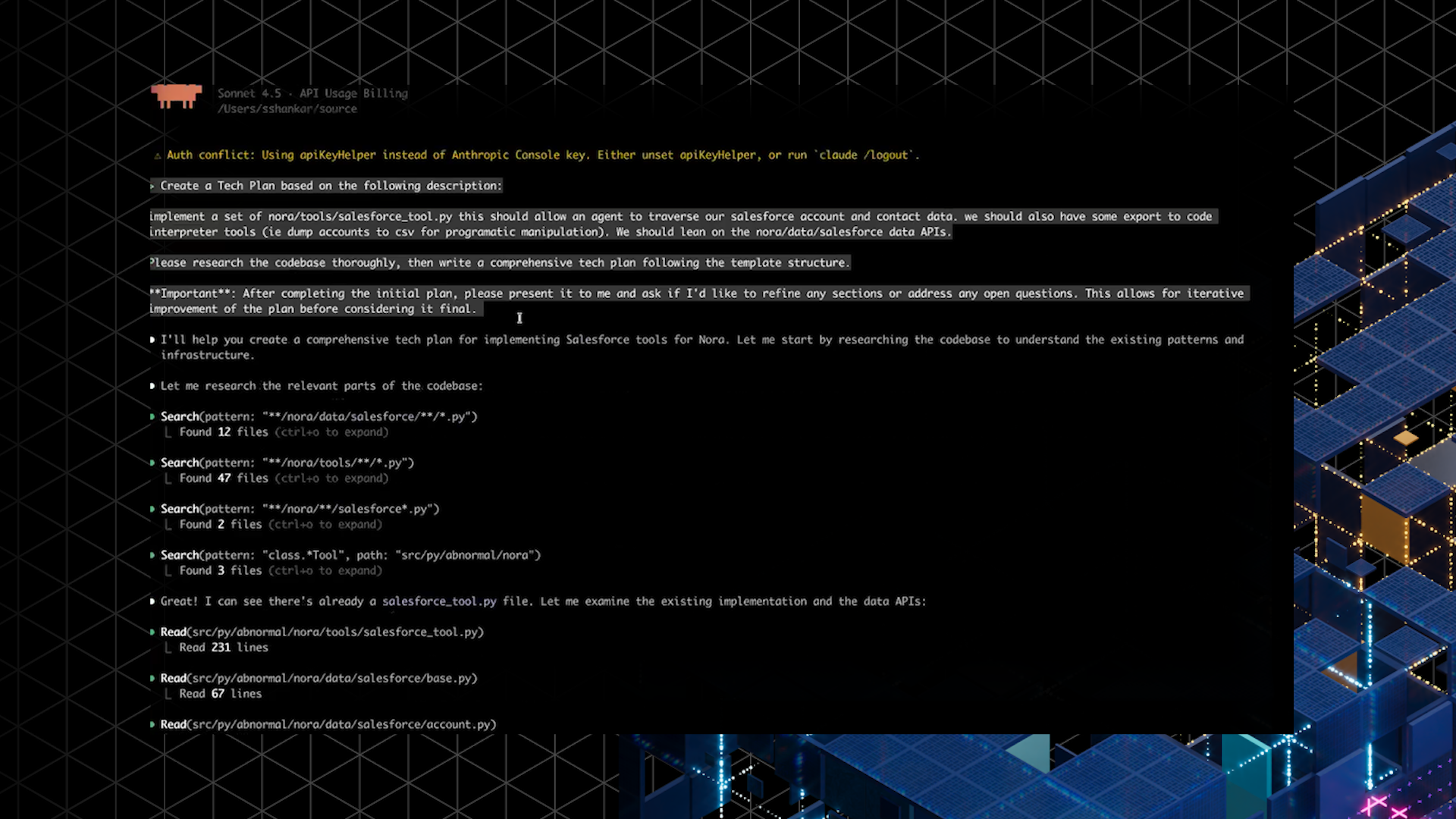
- Abstract input: An engineer types a broad idea, like “improve Salesforce tools for AIPMs.”
- Nora Plan generation: The agent reads relevant Markdown files, Jira tickets, and internal references to produce a structured design plan.
- Interactive refinement: The system flags underdefined sections and lets the user fill in missing details interactively.
- AI-ready design: The output looks similar to a TDD, but its format, phase structure, and prompts are directly compatible with other AI tools like Claude. Engineers can literally say, “Claude, go build this,” and it works.
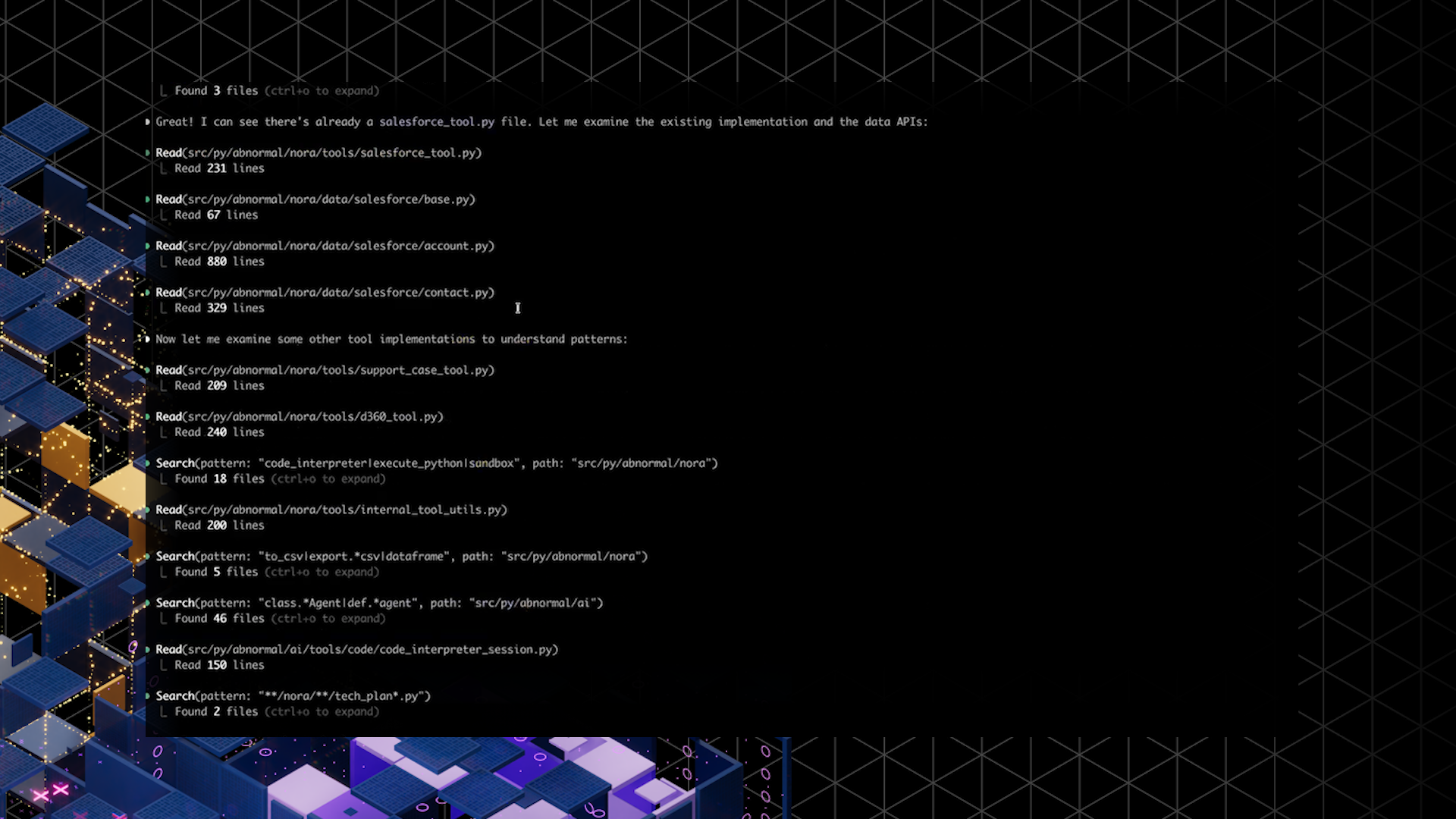
This pivot from writing TDDs for humans to designing for both humans and AI creates a seamless path from idea to design to code.
Faster, Smarter, More Consistent Design
Nora Tech Plan delivers a number of major benefits over traditional design workflows:
- AI-ready documentation: Each design doc doubles as an input prompt that AI can immediately use for implementation.
- Reduced friction: Eliminates the translation layer between architecture and coding, speeding up iteration.
- Knowledge reuse: Captures senior engineers’ best practices and encodes them into templates that junior developers can automatically leverage.
- Broader context: By integrating internal data from Jira, codebases, and Markdown documentation, Nora generates more informed designs than standalone AI tools.
- Consistency and speed: What once required multiple back-and-forth iterations now happens in one loop.
In short, Nora Tech Plan turns design documentation from a static artifact into a dynamic AI interface, something both engineers and machines can act on.
The Road to Fully Automated Architecture
The next evolution of Nora Tech Plan will focus on expanding its reach and precision. Shrivu envisions full integration with the Nora platform, so customer RFEs (requests for enhancement) can automatically generate draft tech designs for review.
Additionally, he sees tighter codebase linking, enabling AI to reference existing system components directly when writing new designs and cross-team adoption, bringing the tool into broader engineering workflows beyond internal R&D.
The tool is designed for continuous learning, where each approved design helps refine Nora’s understanding of Abnormal’s architecture standards.
Redefining AI’s Role in Engineering
What makes the Nora Tech Plan so awesome is its mindset: don’t force AI to mimic human processes, teach AI to design in ways humans can trust.
By redefining what a design document can be, Shrivu has built something far more powerful than a generator; it’s a bridge between creativity and automation. It’s another example of Abnormal’s innovation culture in action: moving beyond “AI assistants” to create AI collaborators that understand, reason, and build alongside us.
