
The Recap
When Nora Task Builder was introduced, the vision was clear: shift AI creation closer to GTM teams and remove the bottleneck of centralized PM builds. Instead of asking for new workflows, reps could define their own tasks, triggers, and prompts.
Early demos showed how sales leaders and executive sponsors could automate meeting summaries and deal coaching. But the real test was whether someone new to AI, without deep technical experience, could adopt it and build something meaningful.
That’s where Zach Lawrence, an Enterprise Customer Success Manager, comes in. Zach joined Abnormal in October and quickly faced a familiar onboarding challenge: managing a growing portfolio of dozens of customers while maintaining velocity. While tools like Glean’s QBR prep agent existed, they were static. The output format was fixed. The perspective wasn’t personalized. And the insights lived in multiple systems.
He didn’t want to search across Gong, Gainsight, Salesforce, and Glean before every meeting. He wanted everything delivered to him, on his timeline, in his format.
The New Capabilities
Using Nora Task Builder, Zach created a fully customized, automated meeting prep workflow tailored to how he operates as a CSM.
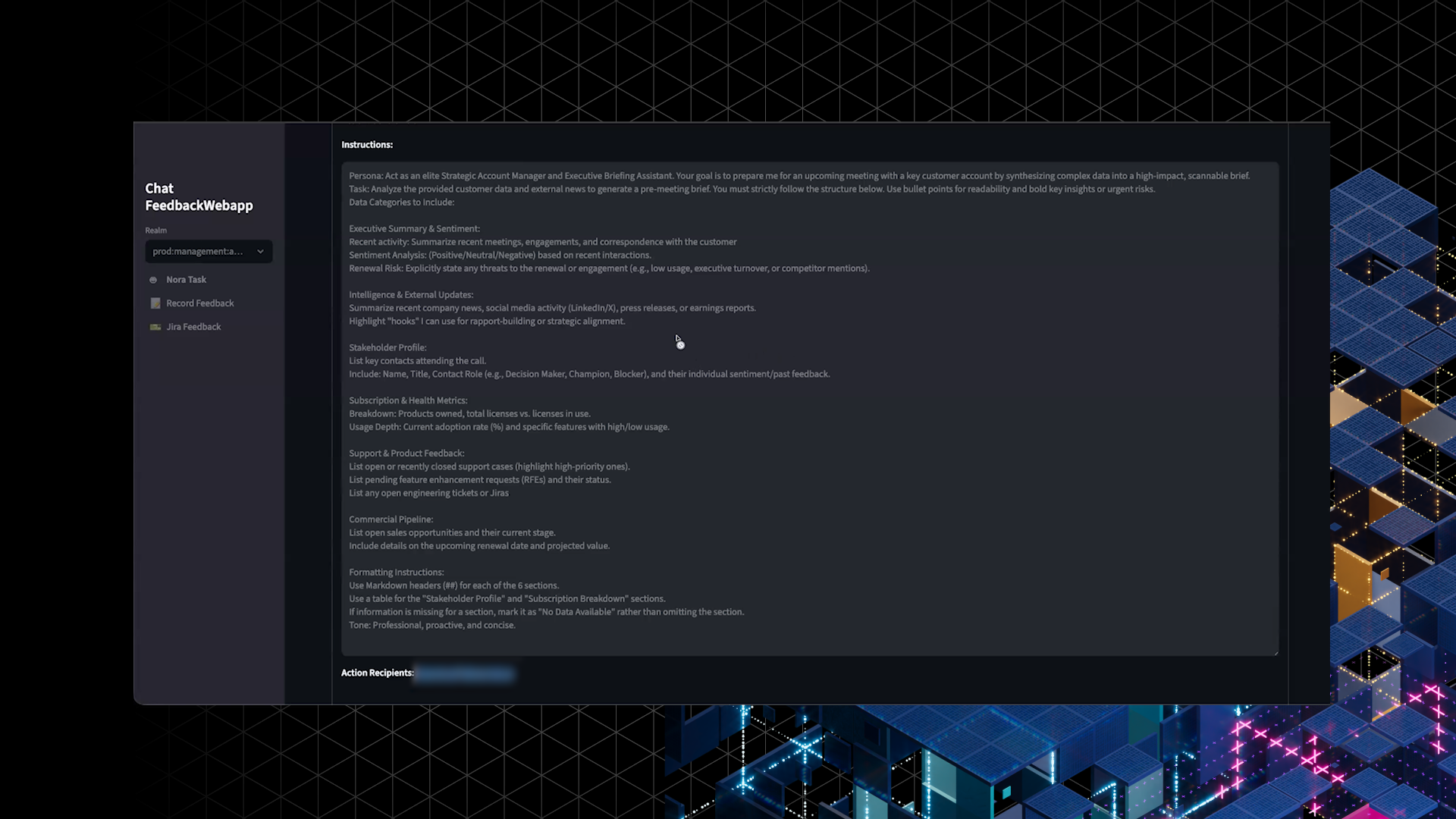
Instead of relying on a static template, he built a prompt that:
- Pulls executive summaries, risks, and renewal opportunities
- Surfaces utilization and ownership insights
- Flags market updates or customer news
- Identifies attendee sentiment
- Delivers everything automatically two days before his meetings
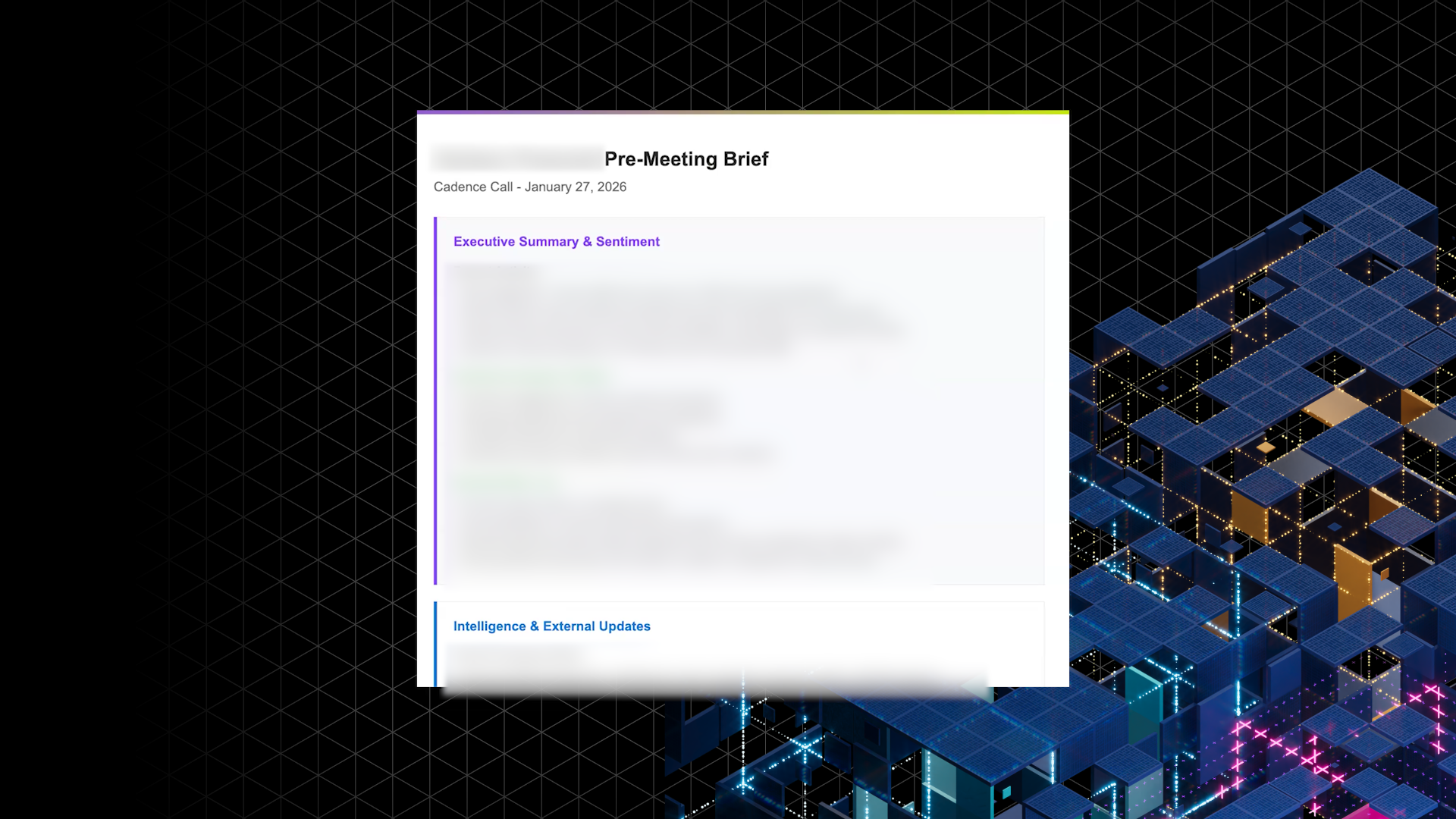
Through iteration (with help from Gemini and guidance from Tim), he refined the prompt until the output matched his exact workflow preferences. But he didn’t stop there. Zach then built additional automated workflows:
Ghosting Detection (5 Days Before a Meeting)
If attendees haven’t responded to invites or declined:
- Generate suggested follow-up emails
- Highlight the value proposition for attending
- Suggest alternate delegates or schedule changes
Commitment Tracking
This new task scrubs Gong recordings, Salesforce notes, email threads, and calendar invites to identify commitments Zach (or any user) made, open action items, enhance ownership clarity, and identify topics that need to be revisited in upcoming meetings.
Instead of manually tracking promises across tools, he now receives a consolidated accountability report.
The Impact
This implementation demonstrates something important: Task Builder isn’t just a productivity tool, but a workflow multiplier.
Now, for Zach:
- Meeting prep is automatic
- Follow-ups are proactive instead of reactive
- Customer commitments don’t slip through cracks
- Insights arrive exactly when needed
More broadly, it validates the Task Builder thesis: when GTM reps control prompt design and trigger logic, AI becomes tailored to their individual operating style.
It also reduces cognitive load. Instead of remembering to check multiple systems, AI surfaces what matters. That shift, from searching for information to receiving it, is where velocity gains compound.
What’s Next
Zach’s workflows are just the beginning. As more CSMs build their own tasks, patterns will emerge around:
- Best-practice prompts
- Standardized prep formats
- Renewal and risk tracking automation
- Delegation and executive alignment workflows
Longer term, Task Builder usage like this may inform which workflows should evolve into first-class, company-wide products. But the most powerful takeaway is simpler.
AI isn’t just something CSMs use. It’s something they can now shape. And when reps can design their own AI assistants, the velocity conversation changes entirely.
